The Different Stages of Indie Game Development
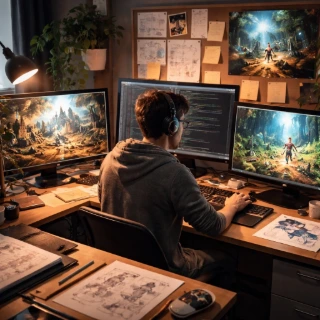
An independent game developer will usually have to go through the following key stages if they’re embarking on a game development project:
- Game Ideation and Concept Development
- Game Planning and Pre-Production
- Prototyping
- Game Design and Development
- Testing and Quality Assurance
- Polishing and Refinement
- Launch Preparation
- Game Launch
- Post-Launch Support and Maintenance
At Indie Game Development Review, we explore each and every one of these stages so you can understand what they entail.
Designing the Game: Building Worlds, Mechanics, and Player Progression
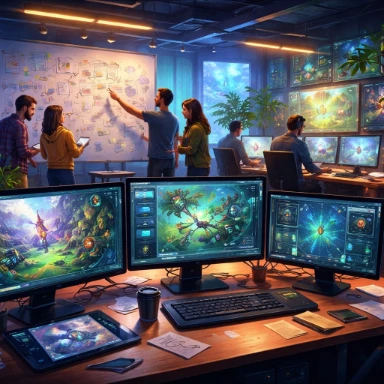
Game design is one of the most important and demanding aspects of game production. It is at this stage that the developer works on what players will actually do in the game, what the game world will look like, and how the experience will change as players progress through the game.
In more technical terms, the developer is simply working on:
- Game Mechanics: The rules, systems, and interactions that define how the game is played.
- World Design: The environments, settings, characters, and details that give the game its identity.
- Player Progression: The way players unlock abilities, overcome challenges, discover new content, or otherwise advance through the game.
Getting these elements to work together is not always straightforward. That is why we are here to spotlight all that game design entails, and how these different elements come together to create an experience that players enjoy.
Balancing Creative Ambition with Budget and Development Time
Developers usually have ambitious ideas for their games. But then, their available budget, team size, skills, and time most of the time place limits on what is possible. When that happens, they then have to make difficult decisions about priorities. They have to decide which features are essential and which ones can wait. They have to decide if a particular idea is worth the additional development time and cost or not.
At Indie Game Development Review, we will explore how developers navigate these trade-offs and the decisions they can make when creativity has to meet practical limitations.
Preparing an Indie Game for Launch and What Comes After
Getting the main parts of a game built does not necessarily mean it is ready for release. There is still testing, refinement, polishing, and a lot of preparation to consider. For example, developers may need to identify and fix bugs, test gameplay and performance, prepare the game for distribution and release, etc.
These are also some of the areas that we will be exploring at Indie Game Development Review, looking at what developers need to consider when preparing their games for launch and the steps involved in getting a project ready to reach players.
What Comes After Launch: The Realities of Maintaining a Game After Release
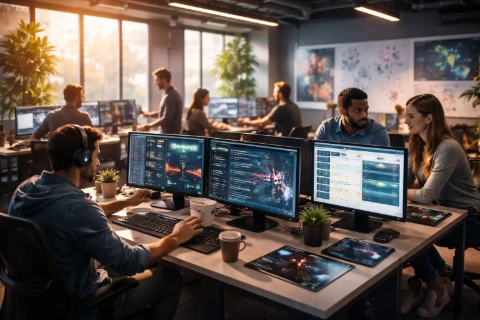
Launching a game is not always the end of the journey. In many cases, it is the beginning of another phase in the game development journey. After launching the game, developers may also need to monitor how players are responding to it, fix issues that emerge, release updates, add new content, and continue engaging with their community.
There is also a need for maintaining the game, and this involves fixing bugs, addressing technical issues, improving performance, updating the game when necessary, and ensuring that it continues to work as expected over time.
At Indie Game Development Review, we will explore all these realities, helping developers understand and prepare for them.
Lessons from Successful Indie Releases
Palworld, Among Us, Undertale, Stardew Valley, and, of course, Minecraft. These are some independently developed games that ended up becoming major successes.
Here at Indie Game Development Review, we believe that these successful games have something to teach. And so, we look beyond the success itself to examine the decisions and circumstances that helped these games get there.
By doing this alongside every other aspect of independent game development that we explore, our goal is to provide all the information you need as far as independent game development is concerned. So if you have any interest whatsoever in gaming, game development, or specifically independent game development, do well to stick around.