Our Areas of Focus
Game development usually sounds as simple as someone having an idea, starting to make a game, and eventually putting it in front of players. But between that first idea and a finished release is a long journey filled with creative decisions, technical problems, financial issues, and a plethora of unexpected challenges.
That start, the journey in between, and the eventual finished product are exactly what we want to explore. So here are some of the key things we’ll be covering on this site:
Ideation in Game Development
Every game starts with an idea. It is at this ideation stage that developers begin figuring out what kind of game they want to make, who it is for, what resources it will require, and, perhaps, whether or not the idea is realistic enough. These are some of the conversations we will be having at Indie Game Development Review, looking at how developers actually turn a concept into something they can actually build.
The Development Process
There is a lot that goes into turning a game idea into something players can actually experience. These include concept and planning, prototyping, production, testing, refinement, finding bugs, improving gameplay, publishing, marketing, and further development after release.
Of course, the process rarely goes exactly as planned. That is why we are not just interested in the finished product. On this platform, we are also interested in what happens during development: the experiments that work, the ideas that have to change, the problems developers encounter, and more.
The Costs of Independent Game Development
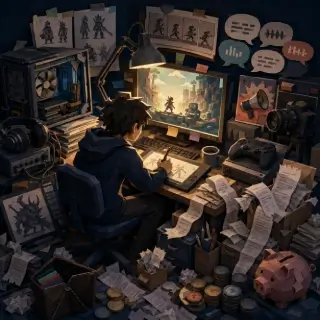
Making a game independently can be expensive, and the full cost is not always obvious at the beginning. Some of the many other expenses that can appear throughout production include:
- Development hardware and software
- Art, animation, music, and sound assets
- Localization and translation
- Marketing and promotional materials
- Publishing and platform-related expenses, etc.
At Indie Game Development Review, we will explore these less obvious sides of game production and examine what it really means to build a game independently, particularly when resources are limited.
Finances and Funding
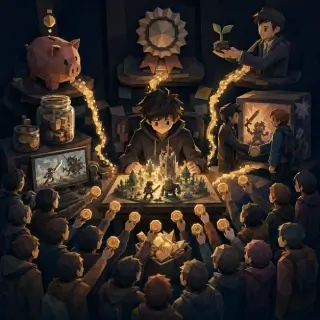
Where does the money come from for an independent developer? Because not every independent developer has the financial resources to fund a game from beginning to end.
At Indie Game Development Review, we’ll also cover this in detail, discussing the various ways independent developers can finance their projects, including self-funding, crowdfunding, grants, investors, publishers, early access, and other alternative funding models.
Crowdfunding, in particular, has created a good route for some indie developers. For example, platforms such as Kickstarter let creators present their ideas directly to potential players and raise money before a game is finished. Crowdfunding has also served as an avenue for developers to test whether there is genuine interest in their concept, build an early community of supporters, generate publicity around the project, receive feedback from potential players, etc.
This is another area we will be exploring: how indie developers finance their projects, the opportunities available to them, and the risks that can come with each funding route.
Why Some Games Succeed & Some Don’t
There are countless developers with exciting ideas, but having a great concept does not guarantee a finished game. There are also several important factors to consider, which can influence whether a project will eventually be successful or not. These include:
- How realistic the project's scope is and whether it matches the available resources.
- How effectively time is managed throughout the development process.
- Whether the project has sufficient financial backing to reach completion.
- Whether the team has the capacity to handle the project's demands.
- How adaptable developers are when plans or circumstances change, etc.
At Indie Game Development Review, we want to understand what makes an independent game successful, but also what can cause a promising project to stall, change direction, or never reach release.
Competing with Large Studios
Major studios may have hundreds of developers, large production budgets, dedicated marketing teams, and access to resources that most independent creators can only dream of. So, how does a solo developer compete when they have to deal with game design, programming, art and animation, sound and music, marketing, and so on?
At Indie Game Development Review, we explore how solo developers and small studios work within these limitations. We discuss the tools and strategies they use, and how some even manage to create games that can stand alongside projects backed by considerably larger teams.
Building a Loyal Community
Making a good game is one thing. Getting people to notice it is another. And for independent developers, there are several ways to go about that, including sharing development updates, screenshots, trailers, playable demos, behind-the-scenes content, or simply talking about the development process on social media and building a community around it.
For an independent developer without the marketing budget of a major publisher, having a community can be especially valuable. It can become a source of visibility, encouragement, feedback, and even potential customers.
That is another area we will be dwelling on here at Indie Game Development Review, exploring how independent developers can build, engage, and grow a community around their games even before launch.
Player Feedback During Development
Once a community begins to form, another valuable resource to developers is player feedback. Feedback can come through playtests, demos, early-access releases, community discussions, reviews, surveys, direct conversations with players, etc.
At Indie Game Development Review, we’ll explore all this, and also look at how developers navigate the balance between using feedback to improve their games while maintaining the creative identity of the project.
Common Mistakes
For all the excitement surrounding indie games, development can also be full of mistakes. Some are small setbacks that can be fixed along the way. Others can add months or even years to a project, or prevent it from being released altogether.
Some common mistakes include:
- Underestimating how long development will take
- Failing to create a realistic budget
- Adding too many features during development
- Ignoring marketing until shortly before launch
- Not knowing when to simplify or remove a feature, etc.
We will be looking at these mistakes and the lessons developers can learn from them.
Digital Storefronts & Independent Publishing
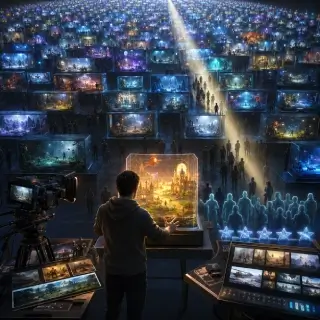
Today, developers no longer have to depend entirely on traditional publishing and physical distribution to reach an audience. Digital platforms such as Steam and itch.io have made it easier for independent creators to publish games and make them available to players across different markets.
But then, the easy access to distribution has also created a new problem of discoverability. That is, with thousands of games competing for players' attention on these platforms, simply putting a game on a digital storefront does not guarantee that anyone will find it. Developers now have to think carefully about presentation, marketing, community building, store pages, trailers, screenshots, reviews, and timing.
That changing relationship between developers, publishers, platforms, and players is something we will continue to explore at Indie Game Development Review.
Emerging Trends in Indie Game Development
Independent game development is constantly changing. The tools available to developers today are very different from those available to earlier generations, and that evolution is likely to continue. At Indie Game Development Review, we follow these changes and examine what they could mean for independent developers, small studios, and the future of game production.
Following the Indie Game Journey
Indie Game Development Review is an informational publication dedicated to the people, ideas, processes, and challenges behind independent game development. Our goal is to shine a light on independent game production as it happens.
So, if you are interested in discovering promising independent games before they become household names, understanding the people and ideas behind them, or simply getting a closer look at what it takes to turn a game concept into a finished product, you will want to keep an eye on this website. We will be exploring independent game developers, studios, creative processes, challenges, funding strategies, communities, and everything around independent game development.