Exploring New Ideas Through Experimental Game Development
As already mentioned, experimental game development is simply all about an idea that’s being explored. It could be a new mechanic, an unusual concept, a different approach to storytelling, or simply an idea that does not fit neatly into a conventional game.
Instead of immediately turning that idea into a large production, developers can use prototypes and smaller projects to see whether it actually works. This gives them room to experiment, identify problems, and learn what might be worth developing further.
Testing Unconventional Gameplay Mechanics and Player Experiences
Experimentation gives developers the freedom to test gameplay mechanics that may be difficult to fit into a traditional game. A developer may have an unusual idea for how players interact with a game, but there is no guarantee that it will actually be enjoyable.
Creating a prototype can provide a relatively simple way to test that idea. The developer gets to see how it works in practice, observe how players respond to it, and make changes before deciding whether it deserves a place in a larger project.
Creating Sandbox Games That Give Players More Freedom
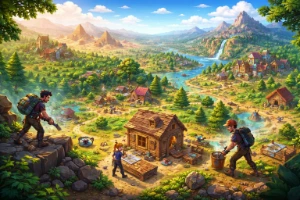
Some experimental projects focus on giving players greater freedom to explore, interact with the environment, and decide how they want to play. They don’t guide players through a fixed sequence of events. Instead, they give them systems and tools that allow them to create their own experiences.
However, these projects can also create interesting challenges for developers, as it requires them to design something flexible enough to support different approaches, but still engaging enough for players to play.
Using Simulations and Real-World Systems for Learning and Exploration
Games can also be used to recreate or explore a real-world system. For example, developers can create a game that simulates how an economy, transportation network, business, or city operates. And then players get to interact with these systems and see how different decisions affect their outcomes.
These games can also give developers a way to explore how complex systems work while giving players an interactive way to understand and engage with them.
Experimenting with Real-World Themes and Creative Concepts
Experimental games can also explore themes and ideas that may not normally be the focus of mainstream game development. Developers can use games to examine real-world situations, social issues, human behavior, or other subjects through interactive experiences.
This is another area where experimentation can be valuable because developers are not necessarily trying to follow an established formula. They can instead explore different ways of presenting ideas and allowing players to experience them.
How Experimental Side Projects Influence Larger Game Productions
Not every experimental project remains a small project. Sometimes, the ideas developers discover while working on side projects can eventually influence much larger productions.
A new mechanic, technical solution, visual approach, or way of designing player interactions may begin as a simple experiment before becoming part of a more ambitious game. Even when the original project is never released, the experience gained from developing it can still prove useful in future productions.
When Experimental Game Ideas Become Successful Commercial Products

Sometimes, experimentation can also lead to something much bigger. A developer may create a prototype simply to test an idea and later realize that the concept has enough potential to become a complete commercial game.
That can happen when an unusual idea attracts players, a prototype develops a following, or an experimental concept proves capable of supporting a much larger experience. In these cases, what started as a simple experiment can eventually become a successful game.
Indie Game Development Review & Experimental Game Projects
At Indie Game Development Review, we explore these different forms of experimentation to provide a clearer picture of how developers use prototypes, side projects, simulations, and other experimental approaches to explore new possibilities. We also look at what developers can learn from these projects and how experimental ideas can influence future productions.
Our goal is to provide all the information you need to better understand experimental game development and its role in shaping new gaming experiences.